Blog
Blog

How to Realistically Ease Anxiety
Watch the video below to hear me share my personal experience with PMDD, anxiety, and the mindfulness techniques that help me navigate difficult days.
When Anxiety Appears Out of Nowhere
This week has been a challenging one.
I'm currently at the point in my menstrual cycle where I'm ovulating, and for me, that's often when my PMDD symptoms become more intense. One of the biggest challenges is anxiety. Some of what I will say here is about PMDD, but the principles in how to deal with it are the same for all anxiety, so bear with me if you don't have PMDD but have anxiety.
Anxiety can appear suddenly and without warning. One moment you feel completely fine, and the next your entire body feels as though it's gone into panic mode.
Earlier this week, I was sitting on the sofa playing a game on my phone. Nothing stressful was happening. Nothing had triggered me.
Then suddenly, I felt a rush of anxiety flood through my body.
Years ago, that feeling would have sent me into a spiral.
Today, things are different.
Not because the anxiety has disappeared, but because mindfulness has taught me how to recognise what's happening before it takes over.
Understanding PMDD and Anxiety
One common misconception about PMDD is that it's simply caused by hormone imbalances.
Research suggests that for many people with PMDD, hormone levels themselves are often normal. Instead, the body has an increased sensitivity to the natural hormonal fluctuations that occur throughout the menstrual cycle.
For me, that sensitivity shows up through my nervous system.
As my hormones shift, my nervous system becomes more reactive. My anxiety levels rise. My body becomes more alert to perceived threats, even when there aren't any.
Understanding this has been life-changing, because once you understand what's happening, you can stop blaming yourself for it.
The Difference Between Then and Now
Before I discovered mindfulness, anxiety felt terrifying.
I would notice the physical sensations:
Racing heart
Tight chest
Tingling sensations
Feeling unable to breathe properly
And then I'd panic about the panic!
The anxiety would trigger fearful thoughts.
The fearful thoughts would make me breathe faster.
The faster breathing would increase my stress response.
And before I knew it, I was trapped in a cycle that felt impossible to escape.
Now, when anxiety appears, my first thought isn't:
"What's wrong with me?"
It's:
"Ah, I recognise this."
That awareness changes everything.
Why Awareness Is the First Step
One of the most powerful benefits of mindfulness is learning to become aware of what's happening in your body.
Many of us spend our lives disconnected from our physical sensations.
We only notice our bodies when something feels wrong.
Mindfulness teaches us to pay attention without judgement.
When anxiety arrives, instead of fighting it, we can become curious.
Ask yourself:
What am I feeling right now?
Where am I noticing tension?
How is my breathing?
What is my body trying to tell me?
Awareness creates space between the sensation and the reaction, and that space gives us choices.
A Simple Breathing Technique That Helps
Once I've recognised that anxiety is present, I focus on my breathing.
If you're new to breathwork, don't worry about taking huge deep breaths immediately.
Start small.
Slow Your Breathing
Simply focus on slowing your breathing down.
Don't force it.
Just gently encourage your breath to become calmer and steadier.
Gradually Deepen the Breath
As your body begins to relax, allow your breaths to become slightly deeper.
If it feels comfortable, pause briefly at the top of the inhale before slowly releasing the breath.
Over time, this becomes easier.
Like any skill, breathing techniques improve with practice.
Adapt It To Your Needs
One thing I often tell people is not to get too caught up in doing mindfulness "perfectly."
Many breathing exercises suggest inhaling through the nose. That's ideal if it works for you, but I have ongoing sinus issues and narrow nasal passages, so nose breathing isn't always easy.
The important thing isn't perfection.
The important thing is breathing in a way that helps regulate your nervous system.
Something is always better than nothing.
What About Panic Attacks?
When anxiety becomes intense, breathing exercises can feel difficult at first. Many people describe feeling as though they can't get enough air. I completely understand that feeling.
One thing I find helpful is allowing myself to yawn. Yawning naturally encourages a deeper breath and can help reset the nervous system before moving into more structured breathing exercises.
It's a simple technique, but sometimes the simplest tools are the most effective.
Progress Doesn't Mean Symptoms Disappear
One thing I want to emphasise is that mindfulness hasn't stopped me from experiencing anxiety.
I still have PMDD.
My body still reacts to hormonal changes.
My nervous system still gets triggered.
The difference is that I recover much more quickly. Instead of spending hours or days caught in a spiral, I can recognise what's happening, use the tools I've learned, and support myself through it. This recent episode only lasted a few minutes.
That's what progress looks like.
Not becoming perfect.
Not eliminating every symptom.
But building the skills that help you navigate life's challenges with greater confidence and calm.
You Don't Have To Figure It Out Alone
If you're struggling with anxiety, PMDD, overwhelm, or feeling stuck in patterns that no longer serve you, support can make a huge difference.
Through my mindset coaching, I help people develop practical mindfulness techniques, build emotional resilience, and create healthier ways of responding to stress and anxiety.
You don't have to wait until things feel unbearable before asking for help.
Sometimes the smallest changes create the biggest transformation.
Ready to Learn More?
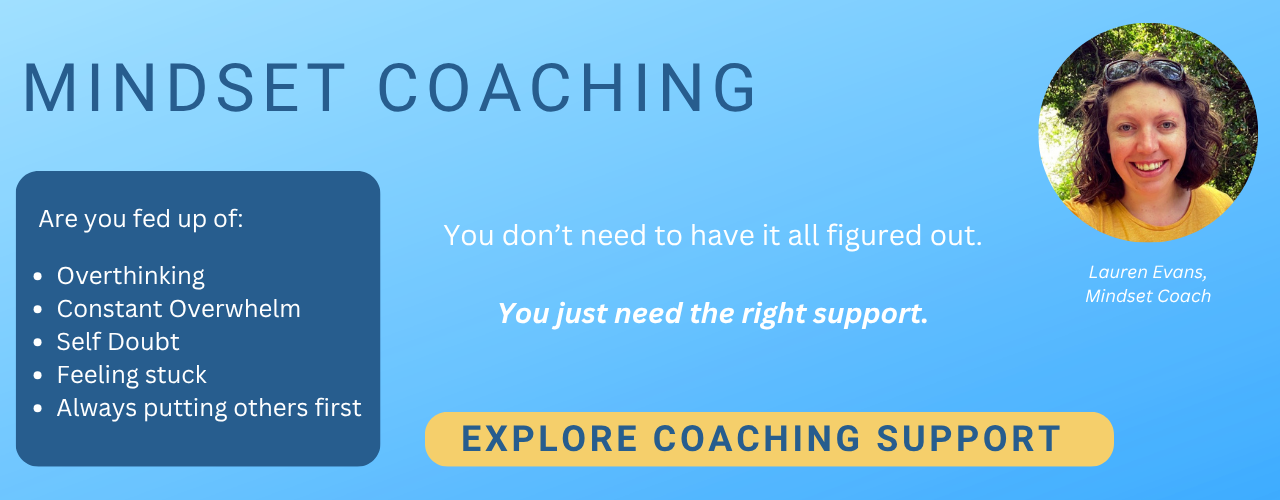
If you'd like support in managing anxiety, improving your mindset, and building a calmer relationship with your thoughts, you can find out more about my coaching services by clicking the image below. I offer 'coaching for everyone', but I also do coaching specifically for ADHD mums.